
A hold point or witness point isn’t paperwork. It’s the gate your money moves through.
A hold point is where work stops until someone signs it off – and on civil work, that sign-off is what the progress claim is assessed against. No sign-off record, no cleared claim line. So every signature you’re still chasing by phone, email, or a drive to site is a line on the claim sitting held – your own money, financing someone else’s caution. CONQA puts the sign-off where the work is: the nominated party approves digitally, the record lands against the lot, and the line has its evidence the day the claim goes in.
“We rely on QA to be paid. We don’t have our QA, we don’t get paid. So I’m going, well, we’re at risk every month now.”
– a civil construction contractor
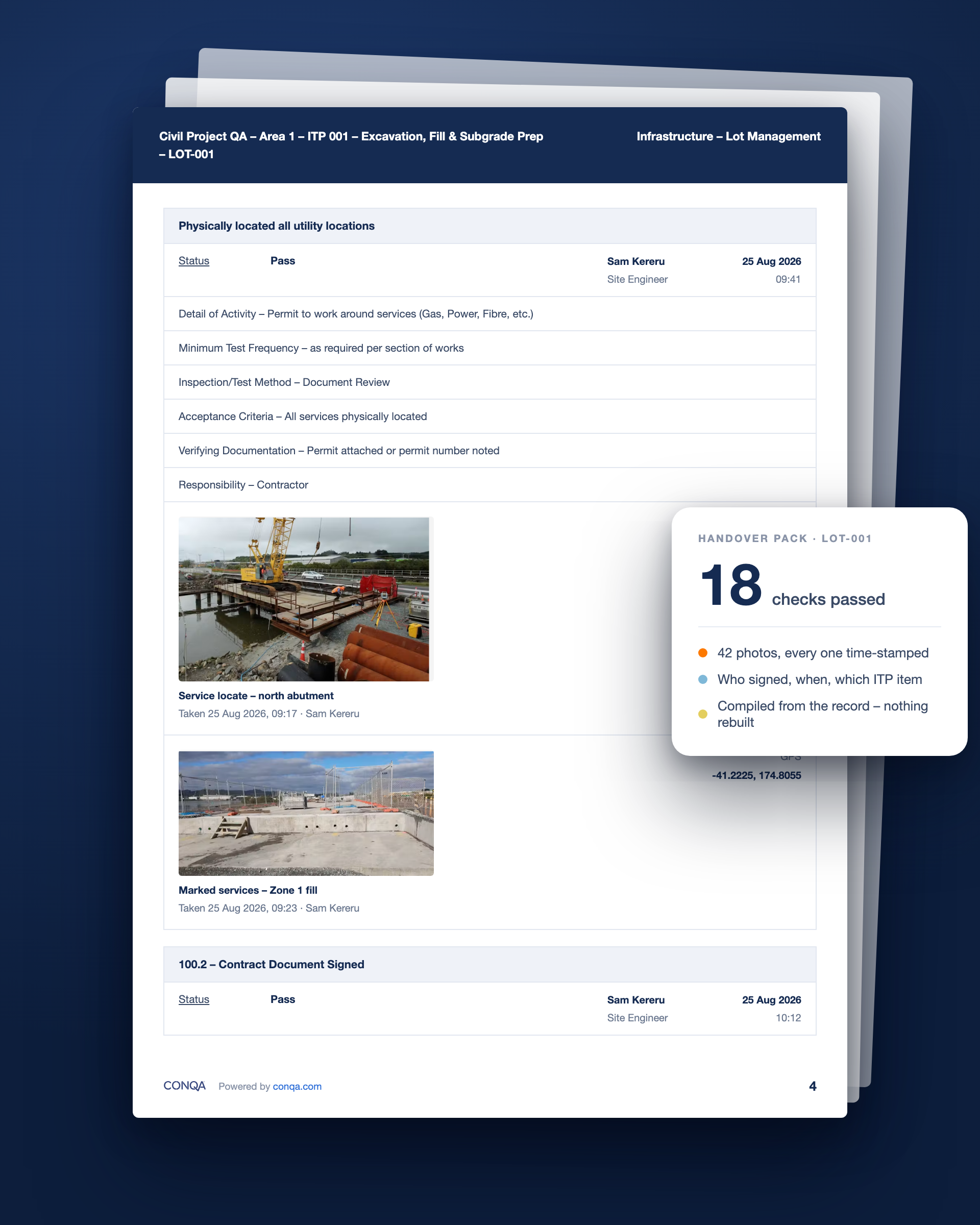
The hold point signed off against the lot – the claim line carries its evidence the day it goes in.
QA sign-off software: who approved what, when, in what sequence.
The audit trail is the part that keeps paying after the claim clears. When work is questioned – next month or ten years on – the only version of your defence is the record you kept at the time: who inspected it, who approved it, when, in what order, against which specification. CONQA keeps that trail in one place, built automatically as each hold point is signed off. Show you followed the spec, and the dispute stops being yours.
“If we have to come back in ten years and they say how’d you guys put that repair in… we can say, this is what the engineer specified and this is the steps we took.”
– a marine concrete repair contractor
The audit trail builds itself as each hold point is approved – in one place, not chased by phone and email.
Your record, not the principal’s system.
The sign-off workflow is contractor-side. The principal’s representative or engineer approves the hold point and gets visibility without changing their own systems – and the record that results belongs to you. It’s exportable in full, independent of anyone else’s stack, and it survives the file, the person, and the project. The trail you build to clear this month’s claim is the same one that answers for the work years later.
The record belongs to the contractor – exportable in full, independent of the principal’s stack.